Programming
- Python 5+
- MATLAB 6+
- JavaScript 3+
- SQL 4+
Biography
Ph.D. in Artificial Intelligence (UPC-BarcelonaTech). I work on federated learning, explainable AI, and applied deep learning — from research to containerized production systems.
Dr. Arijit Nandi is an Advanced AI researcher and engineer with a Ph.D. in Artificial Intelligence from UPC-BarcelonaTech and over 6+ years of experience building scalable, privacy-preserving, and interpretable AI systems for real-world deployment.
His work spans federated learning for privacy-preserving model development, explainable AI (XAI) for transparency and accountability, and applied deep learning across time-series, sensor data, and language-based systems. On the applied side, he builds LLM-powered tools for intelligent automation — including content personalization, workflow optimization, and decision-support assistants — alongside an XAI-as-a-Service platform aimed at democratizing model interpretability. He architected EDFL, an open data space federated learning framework recognized by the European Commission on its Innovation Radar.
He bridges academic rigor and production deployment, with experience across the full ML lifecycle: from research and prototyping to containerized, scalable systems in real-world environments. His focus is on making AI not just performant — but transparent, safe, and human-centric.

Core stack for modeling, data systems, MLOps, and applied AI delivery
My professional journey
Big Data and Data Science Unit Eurecat, Barcelona, Spain
Leading AI initiatives and developing machine learning solutions for enterprise clients.
Tuttify.io
Contributed as an AI expert to design and develop emotion recognition from facial expression using Tensorflow 2.0 and FER 2013, CK++. The trained model is deployed in the backend of Tuttify (https://tuttify.io/) to recognize different emotions of the students.
Training Unit Eurecat, Barcelona, Spain
Contributed as an AI expert to design and develop AI MOOC course for young people (AIM4YOU) under the EU project YNSPEED (Youth new personal & employable skills development).
Research systems with published outcomes and open-source implementations
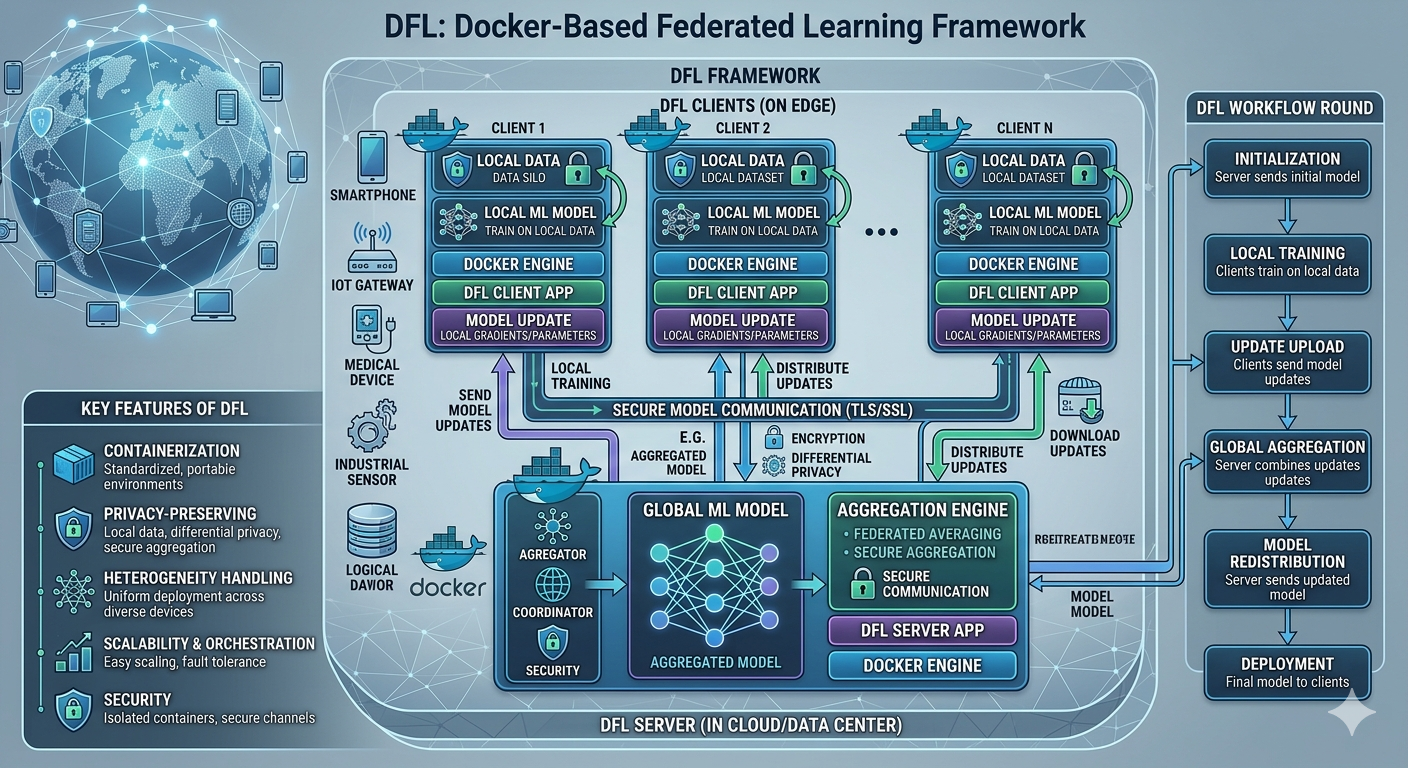
Designed and deployed a Docker-enabled federated learning framework (DFL) for multi-modal data stream classification. Clients and global servers communicate via lightweight MQTT protocol, enabling real-time emotion state classification from distributed physiological data (EDA + RB) while preserving data privacy.
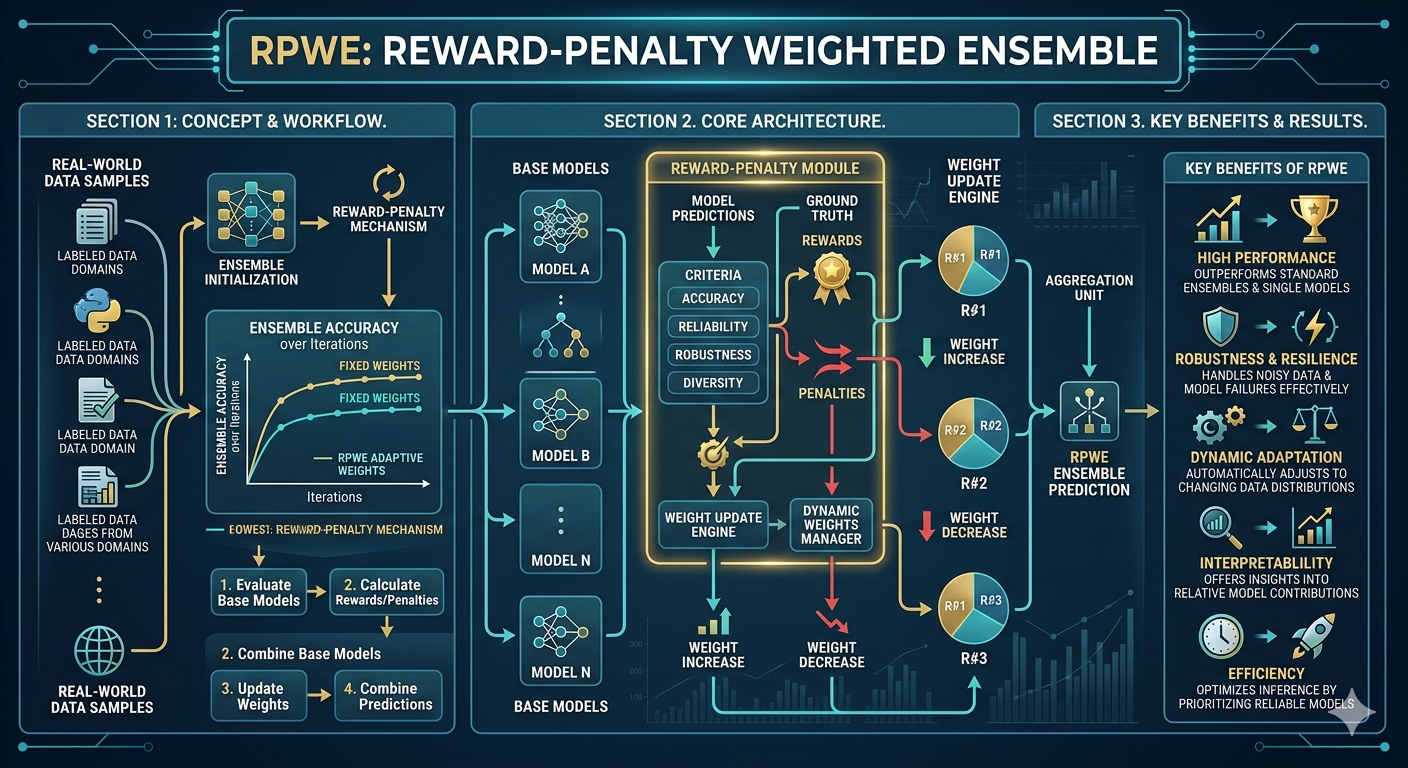
Developed a novel Reward-Penalty Based Weighted Ensemble (RPWE) approach for emotion state classification from multi-modal physiological data streams (DEAP & AMIGOS datasets). Classifiers are dynamically rewarded or penalized based on predictive performance, with an auto-adjusting beta factor.
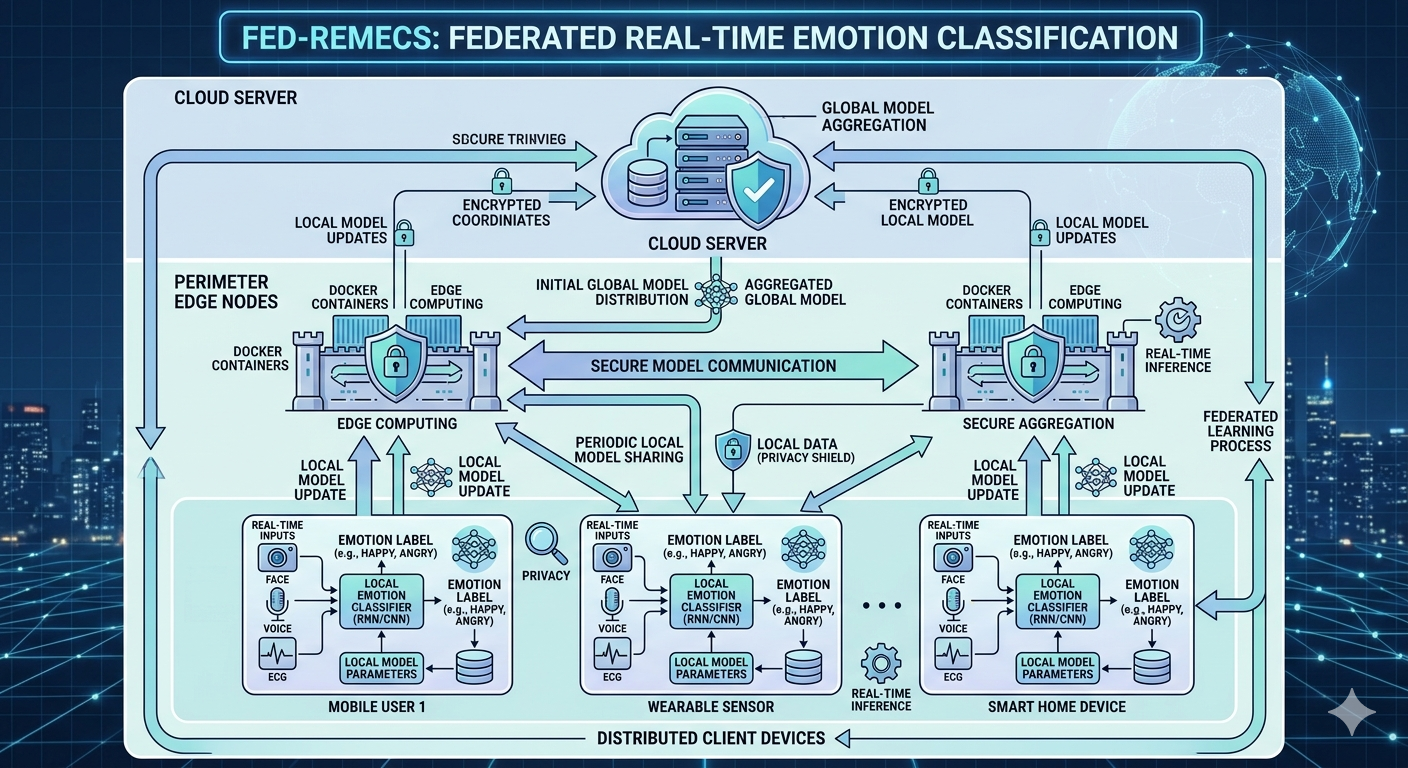
Built a federated learning framework (Fed-ReMECS) for real-time emotion state classification from multi-modal physiological data streams via wearable sensors. Uses MQTT for IoT communication and builds a global classifier without accessing users' local data, ensuring privacy. Evaluated on the DEAP dataset.
My academic background

Specialized in Artificial Intelligence and Machine Learning with focus on deep learning applications.

Specialized in Artificial Intelligence and Machine Learning with focus on deep learning applications.

Graduated with honors. Focused on software engineering and data structures.
Doctoral research
Research contributions and scientific work
International Conference on Pattern Recognition, 18-33, 2025
Music and Sound Generation in the AI Era: 16th International Symposium, CMMR …, 2025
icSPORTS, 199-205, 2024
EGU24, 2024
European Geosciences Union General Assembly 2024 (EGU24), 18231, 2024
Springer Nature Singapore, 2024
OSF, 2024
Universitat Politècnica de Catalunya, Departament de Ciències de la Computació, 2024
International Conference on Pattern Recognition, 18-33, 2024
European Geosciences Union General Assembly 2024 (EGU24), 11930, 2024
Springer, 2023
Authorea Preprints, Eurecat Centre Tecnològic, Barcelona, Spain, 2023
arXiv preprint arXiv:2302.14269, 2023
International Symposium on Computer Music Multidisciplinary Research, 59-71, 2023
TechRxiv 2023 (0921), 2023
Soft Computing: Theories and Applications: Proceedings of SoCTA 2022, 573-588, 2023
Soft computing: Theories and applications: Proceedings of SoCTA 2022, 147-159, 2023
Computing 105 (10), 2195-2229, 2023
Ismir 2022 Hybrid Conference, 2022
Springer Nature, 2022
International journal of neural systems 32 (12, article 2250049), 1-22, 2022
arXiv preprint arXiv:2207.06410, 2022
International Symposium on Ambient Intelligence, 123-133, 2022
Authorea Preprints, 2022
Methods 204, 340-347, 2022
arXiv preprint arXiv:2211.12874, 2022
International conference on engineering applications of neural networks, 423-435, 2021
Sensors 21 (5), 1589, 2021
Springer Nature, 2021
2020 international joint conference on neural networks (IJCNN), 1-7, 2020
2020 International conference on omni-layer intelligent systems (COINS), 1-6, 2020
2019 IEEE Region 10 Symposium (TENSYMP), 681-686, 2019
arXiv preprint arXiv:1905.04522, 2019
IEEE Transactions on Vehicular Technology 69 (2), 1319-1327, 2019
OSF, 0
No publications match your search.
Recent essays on machine learning and applied AI
A friendly introduction to federated learning—what it is, why it matters for privacy, and how to simulate it with plain TensorFlow and Ke...
Explore the fundamentals of deep learning and neural networks, from basic perceptrons to complex architectures, with hands-on examples an...
This comprehensive guide covers the fundamental concepts of machine learning, from basic algorithms to advanced techniques, with practica...
Research partnerships, consulting, and applied ML collaborations
Send a brief note and I’ll reply with the best next step — whether that’s a call, a research discussion, or a scoped engagement.
Research Profiles
Scholarly indexes, identifiers, and professional profiles
Scholarly indexes
Identifiers
Code & professional